Wiederaufarbeitung

Kläranlagen: Dem Klimaschädling Lachgas auf der Spur

Kläranlagen: Dem Klimaschädling Lachgas auf der Spur

Lachgas ist eines der wichtigsten Treibhausgase und trägt ausserdem zur Zerstörung der Ozonschicht bei. Freigesetzt wird es unter anderem in Kläranlagen. Eine Studie untersuchte nun, welchen Anteil daran die Faulwasserbehandlung hat, die in den nächsten Jahren ausgebaut werden soll. Lachgas ist nach Kohlendioxid und Methan das drittwichtigste Treibhausgas. Zudem ist es derzeit die Hauptursache für

Kläranlagen: Dem Klimaschädling Lachgas auf der Spur Weiterlesen »

Veolia to deliver world’s biggest MBBR system to Käppala wastewater treatment plant in Sweden

Veolia to deliver world’s biggest MBBR system to Käppala wastewater treatment plant in Sweden

Veolia Water Technologies subsidiary AnoxKaldnes , the world leader in moving bed biofilm reactor (MBBR) based solutions, will supply its renowned space-saving and capacity increasing solution to support the upgrade of Käppalaverket (Käppala wastewater treatment plant) in Lidingö, Sweden , owned by Käppalaförbundet (Käppala Association). The plant treats wastewater from more than half a million

Veolia to deliver world’s biggest MBBR system to Käppala wastewater treatment plant in Sweden Weiterlesen »

Das Unsichtbare visualisieren

Industrieabwasser enthält oft unbekannte Bestandteile und Stoffmischungen, die durch chemische Analysen nur bedingt und mit grossem Aufwand identifiziert werden können. Ökotoxikologische Biotests schliessen diese Lücke, indem sie Effekte aller in einer Probe enthaltenen Stoffe sichtbar machen können. Die Übersichtsstudie zeigt bestehende Erfahrungen und Bedürfnisse für den Einsatz von Biotests für die Charakterisierung von Industrieabwässern auf.

Das Unsichtbare visualisieren Weiterlesen »

EU Urban Wastewater Treatment Directive: experts call for facility-level monitoring

EU Urban Wastewater Treatment Directive: experts call for facility-level monitoring

Addressing nitrous oxide emissions The EU has recently published a draft revision of its established regulations to guide the management of wastewater and align it with its energy and circular economy strategies. A coalition of technology and application experts has come together to produce a position paper on the European Union’s (EU) Urban Wastewater Treatment

EU Urban Wastewater Treatment Directive: experts call for facility-level monitoring Weiterlesen »

Contre la sécheresse, la Vendée traite ses eaux usées

Contre la sécheresse, la Vendée traite ses eaux usées

Face aux sécheresses à répétition, la Vendée produira dès 2024 de l’eau potable à partir de ses eaux usées. Réutiliser les eaux usées traitées n’est plus une idée farfelue alors qu’une sécheresse hivernale historique frappe l’Hexagone, et que l’eau va cruellement manquer dans les prochaines années. Au Salon de l’Agriculture , Emmanuel Macron a annoncé

Contre la sécheresse, la Vendée traite ses eaux usées Weiterlesen »

Real-time measurement: The missing link in wastewater management optimization

Real-time measurement: The missing link in wastewater management optimization

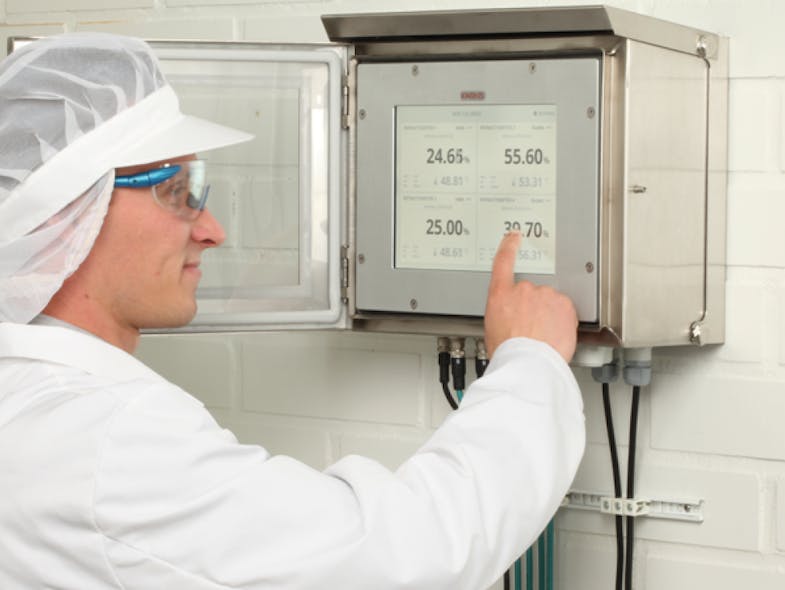
A selectable multichannel user interface allows the user to track TDS levels in real time with a direct connection to all active instruments. With billions of people on the planet and an incredible amount of wastewater created by those people, safe and effective water treatment is critical to speeding up the natural water purification process,

Real-time measurement: The missing link in wastewater management optimization Weiterlesen »

Toilet paper is an unexpected source of PFAS in wastewater

Wastewater can provide clues about a community’s infectious disease status, and even its prescription and illicit drug use. But looking at sewage also provides information on persistent and potentially harmful compounds, such as per- and polyfluoroalkyl substances (PFAS), that get released into the environment. Now, researchers report an unexpected source of these substances in wastewater

Toilet paper is an unexpected source of PFAS in wastewater Weiterlesen »

Enquête auprès des STEP sur les précipitants et les floculants

Une enquête menée auprès des STEP suisses montre qu’elles continuent de manquer de précipitants, mais que la situation est sous contrôle. La plupart des STEP ont des stocks suffisants de précipitants et 97% des STEP procédant à l’élimination chimique du phosphore indiquent pouvoir précipiter le phosphore sans problème. On observe une tendance similaire en ce

Enquête auprès des STEP sur les précipitants et les floculants Weiterlesen »

Nach oben scrollen
This site is registered on wpml.org as a development site. Switch to a production site key to remove this banner.